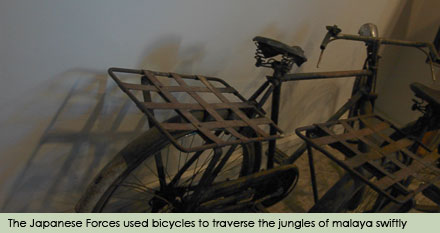
Exhibits 4 - 6 4. Establishing New Order In the three years and eight months of Occupation, there were 5 military administratorss in Syonan, each with ideas of his own. Rivalry between officers also resulted in an ever-changin landscape and lack of continuity in the administration system. This prevented much from being achieved during this period. Trolley Bus and omnibus services were restored by May 1942. They were converted to run on charcoal so as to reduce petrol usage as the petrol was needed for military usage. Cars were few as many were confiscated by the Japanese after the fall of Singapore. Another reason for the low number of cars was the lack of petrol. As a result, cars were in great demand and they were usually used by communities as a whole so everyone could benefit from it. For example, cars sometimes served as ambulances to help transport people who were urgently in need of medical help to hospitals. Other forms of transport such as bullock carts and horse carriages that did not require petrol made a come back. Bicycles and trishaws were also common during the Occupation.
Despite availability of various modes of transportation, people chose to stay indoors to minimise contact with sentries on the streets and also avoid the road blocks manned by the Kempei. The decision to stay indoors was made mainly to avoid trouble and survive this trying period. |