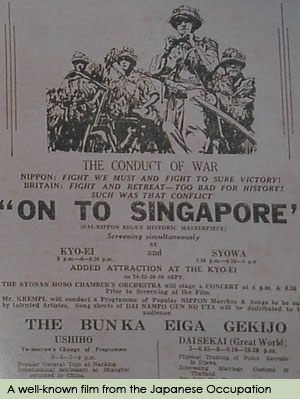
Exhibits 10 - 12 10. "Go-Nippon-Go" Knowing Japanese made one important as they were able to make a living, keep civil jobs or work as teachers or interpreters. Japanese also encouraged the development of Malay language and cultural and literary organisations to spread nationalist ideas and sentiments among the people of the occupied territories 11. Festivals & Celebrations Celebration of local festivals was allowed. However, there were certain limitations and improvements to these celebrations. For example, there was a 3-day-long big celebration for Vesak Day as many Japanese were Buddhists. On the other hand, the lack of food restricted celebrations of Muslim festivals. Christians were allowed to have their European priests and pastors, but contact between priests and church members was frowned upon and closely watched. Cinemas showed Japanese propaganda films, which formed the staple of the films shown during this period. There was also limited freedom of speech. The Japanese films often showed Japanese characters having sumptuous meals, and this usually reminded the audience of the food shortages they face. Indonesian propaganda films, which encourage people to work hard, were also shown.
Gambling dens also thrived in the amusement parks and were encouraged by the Japanese. Opium smoking was also reintroduced. People could still eat at restaurants and food outlets. However, the best establishments were open only to military and senior-ranking Japanese officials. Teahouses were opened in Chinatown and people went there to experience traditional story-telling. Japanese cultural shows were held at Victoria Theatre and Victorial Memorial Hall. Another popular Japanese activity was visiting comfort houses. |