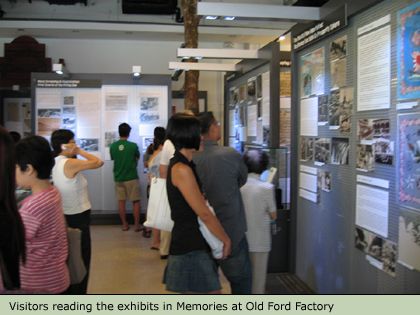
Exhibits 1 - 3 1. The rise of a New Imperialism - The Greater East Asia The Japanese victory over Russia in the Russo-Jap war boosted Japanese confidence and fuelled military ambitions for the next three decades. Manchuria and China were invaded by the Japanese and this resulted in embargo on export of oil to Japan by the US. As a rapidly developing and industrialising country, Japan needed oil to fuel its economy and military. The embargo caused Japan to look beyond China and towards oil rich countries in South East Asia to meet their needs. Japan invaded the South East Asian colonies of the western powers and this led to the Greater East Asia War. The focus of this war was to secure important resources in these colonies. These resources were then in low supply and high demand. Control of these colonies and establishment of strategic bases on them provided Japan with security and allowed her military to be self-sufficient as they will not have to rely on foreign nations for essential resources such as petrol. This helped augment her fighting strength and protect Japan against invasion.
2. Resisting the Rising Sun
There were high anti-Japanese feelings among the overseas Chinese such as the Chinese in Singapore over the Marco Polo incident. The steps that the overseas Chinese took to raise funds for the war effort to help China resist the Japanese invasion are detailed here. Some of the methods they used to raise funds include selling flowers and flags with the help of the Indians, who were supportive of the Chinese resistance war. Street drama performances also helped in raising funds for the war effort. Others donated part of their monthly salaries. Volunteers were enlisted to transport war supplies along the Yunan-Burma Road to help sustain the Chinese war effort. However, the destruction of the Weitong Bridge marked the closure of the Yunan-Burma Road. The remaining volunteers were demobilised. The marco polo incident was a battle between Japan's Imperial Army and China's National Revolutionary Army, marking the beginning of the Sino-Japanese War (1937-1945). The marble bridge itself, Lugouqiao, is an architectural work of eleven arches, restored by the Kangxi Emperor (1662-1722). The 2nd exhibit shows us that Japan's invasion and "co-prosperity sphere" was not well recieved by the countries in South-East Asia, especially China where resistant fighters helped defend against the japanese. The exhibit shows the bravery the resistance fighters had when they fought against the Japanese. Most of the resistant fighters were actually the peasants and local gangsters. Not many of us in Singapore know that the resistance fighters in China fought bravely against the japanese as the first line of defense . Protecting the rest of SEA as they fought on. For us in Singapore, we know about the resistance fighters in Singapore but not overseas, this exhibit proved to be very educational for us. 3. Mass screening & registration: 1st scorch of the Rising Sun All Chinese males were ordered to assemble at mass-screening centres. At some centres, even women and children were ordered to register. Hooded informers picked out anti-Japanese Chinese and the victims were loaded onto lorries and driven away to killing grounds where they were killed. Those who passed the screening received an "examined" chop on their arm, face or clothing. Many did their best to preserve the chop to avoid having to be screened once again. This 3rd exhibits shows what the Japanese did after they had captured Singapore.The unfortunate people that lost their lives along with the cruelty of the traitors and japanese soldiers that executed civilians that were even the slightest bit suspicious without mercy. |