Exhibits 13 - 15
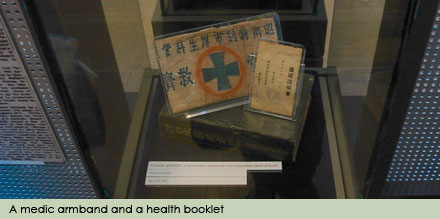
"Azad Hindustan", an Indian newspaper, appeared on 21 February 1942. The magazine, "New Light" was published. People can listen to the radio but foreign channels were banned after the Battle of Midway where the Japanese were defeated by the Americans. Radios were recalled and turning dials were sealed in 1944 so listeners could only tune in to medium wave stations broadcast by Syonan Radio. Persons caught tuning in to illegal radio stations were interrogated by the Kempeitai. There were few private clinics and government hospitals for civilians as most were only reserved for use by Japanese or the military. Thus the people resorted to traditional cures and home remedies. Although these cures and remedies were for the most part harmless, some of them worsened the patients' medical conditions.
15. Working in Syonan Businesses and shops were ordered to reopen after British surrender. However, enemy-owned businesses like those of Chinese tycoons such as Tan Kah Kee were auctioned off or taken over by Japanese companies for their own profit. Manpower was much needed at that time as Syonan was the supply centre of the region. Forced labour was brought in by the Japanese from Dutch Indonesia, particularly Java. Many of these labourers died of starvation and their bodies were disposed like rubbish. Others wandered as destitutes. homeless and penniless. Syonan workers were more fortunate. Their salaries were varied, but they had fixed working hours. Free lunches and rations sometimes form part of their pay. These rations became more important as money eventually became valueless and prices of food increased greatly. |